
The Iran war continues to dominate financial markets and mortgage rates are no exception. That's no great surprise considering rates are driven by movement in the bond market. Still, the direction of the movement may be a surprise to some.
All else equal, things that cause economic pain and uncertainty tend to be good for rates because they drive investors out of riskier assets like stocks and into safer havens like bonds. Higher demand for bonds begets lower interest rates.
"War" typically qualifies as a rate-friendly catalyst, but there's an important exception for wars that lead to inflation. The chain of causality here is fairly simple. A lot of the world's energy products pass through a waterway that has been heavily impacted by the war. In turn, the prices of those commodities have risen sharply, thus increasing inflation expectations.
Rising inflation expectations go hand in hand with higher interest rates and lower odds of Fed rate cuts. The following chart shows how Fed Funds Rate expectations have changed for the September Fed meeting.
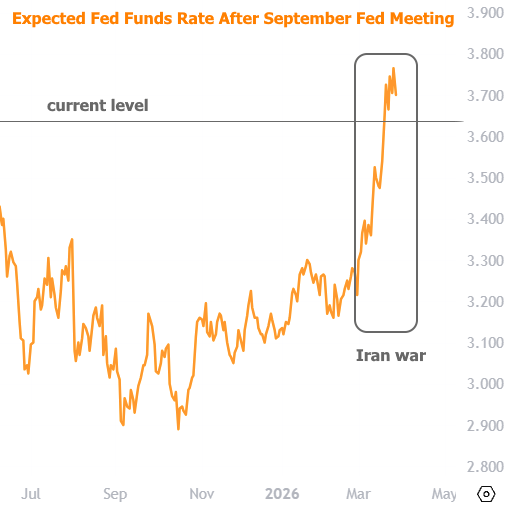
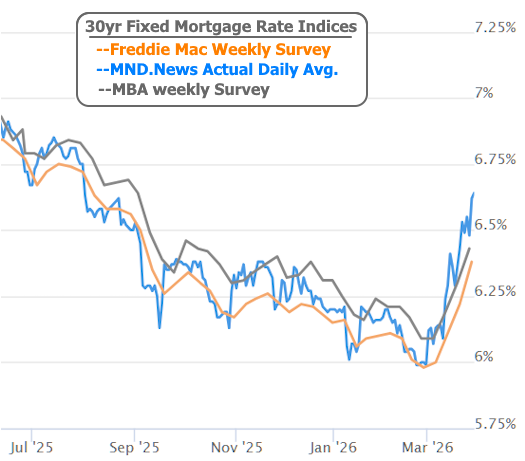
In other words, the market currently sees no chance of a rate cut and a small chance of a rate hike having taken place by then. The trajectory of mortgage rates has been similar with MND's daily index rising above 6.6% this week while weekly indices continue catching up.
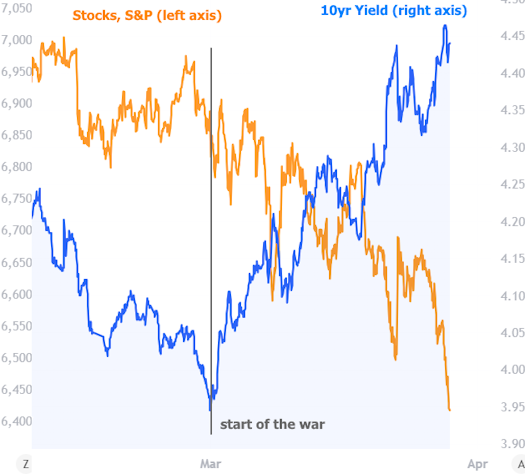
The bond/rate market may be seeing some small benefit from the classic "safe-haven trade" based on the following chart. It shows accelerating losses into the weekend in stocks whereas bond yields are only modestly worst than they were on Monday morning.
Unfortunately, the bond market is also telling us it will take more than mere stability in oil prices to stem the tide of inflation expectations. Oil prices are actually well under levels seen earlier this month and modestly lower than Monday's levels as well.
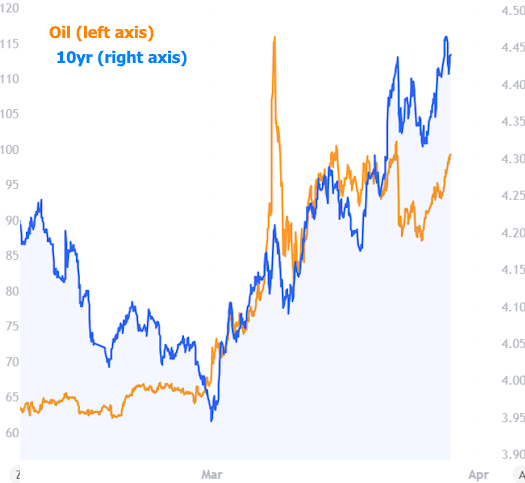
Translation: the rate market assumes that oil prices above 90 dollars will do ongoing damage to the inflation outlook even though "recession" is another potential outcome.
What does this mean for rates/housing? Nothing that can't already be seen in this week's mortgage rate chart. At risk of stating the obvious, the longer the war continues, the more potential there is for rates to rise. If the war officially ends, rates can recover a bit, but it's highly unlikely they'd recover what we've lost so far this month any time soon.