



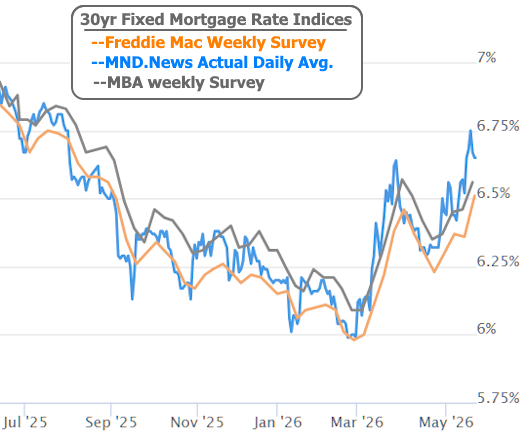
This week ended up being the most volatile for interest rates since late March. By Tuesday, the average mortgage lender was at the highest level in more than 9 months. But ultimately, Friday's rates ended up the same as last Friday's.
For the most part, the news cycle continues to be dominated by war-related headlines. Almost all of this week's back-and-forth in financial markets can be lined up with war news. Tuesday's rate spike was a notable exception. Volume data suggested that at least one very large holder of U.S. Treasuries was doing some very heavy selling.
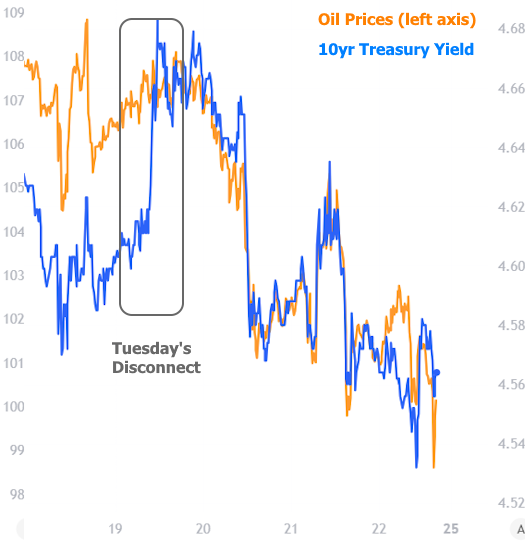
Because rates are based on bonds, heavy selling has an immediate impact. It pushes bond prices lower and interest rates higher, all else equal. Mortgage rates are based on mortgage-backed securities (MBS) and not Treasuries, but MBS and Treasuries are almost always moving in the same direction on any given day. Thus the heavy Treasury selling spilled over to cause big price changes in MBS (and, thus, mortgage rates).
We can't really know too much about why this selling occurred, but we do know that it was probably a very large investment fund based on the volume of trades. Even then, there's no way to know if this was an outright bearish bet against rates or if that fund was simply getting out with the intent of reinvesting in different parts of the bond market in the coming days.
Thankfully, markets reacted to increased peace prospects on Wednesday with sharply lower oil prices and bond yields. Volatility decreased into the end of the week and the news cycle remained constructive enough for bonds to end the week near their best levels. In turn, mortgage rates were able to make it back to last Friday's levels. The counterpoint is that last Friday's level was the previous 9-month high at the time.
The market is fully closed on Monday for the Memorial Day holiday. After that, the primary focus should continue to be on the Iran war peace process.