



While the milestones may be significant, the underlying reasons for them remain simple.
Let's start with the milestones, even though they're not the fun kind. On Thursday, average 30yr fixed mortgage rates hit their highest level in just over a year. The average lender jumped over 6.8% after being closer to 6.5% at the end of June.
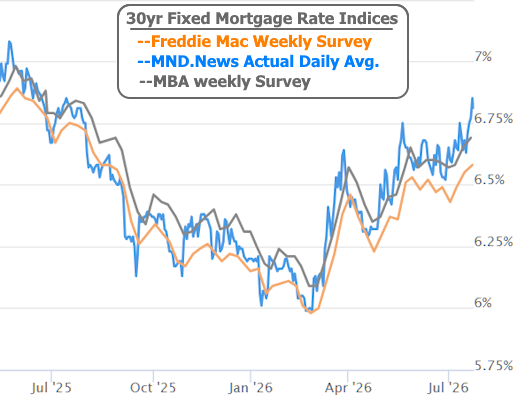
If we think about what's happened since the end of June, the calculus is brutally simple: a resurgence of hostilities in the Iran war coincided with a resurgence in fuel prices which, in turn, pushed rates higher due to inflation implications (higher inflation = higher rates, all else equal).
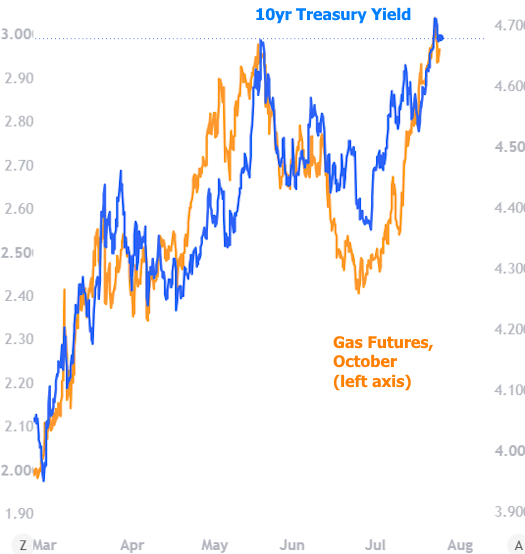
There are several ways to track fuel prices both in terms of today's cash value and the future value for any given month over the next few years. In the slightly bigger picture, gasoline futures for a specific month later in 2026 have done the best job of showing the war's impact on bonds (and bonds, of course, directly dictate interest rate movement).
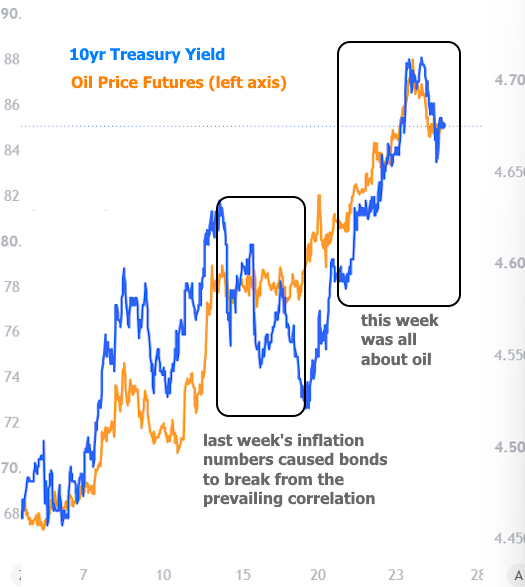
Over shorter time horizons, near-term crude oil prices (either cash or the "front month" futures contract) tend to correlate the best with the bond market. The following chart shows that. It also confirms that inflation is the key consideration because bonds/rates were able to move nicely lower last week following lower-than-expected inflation readings in two key reports.
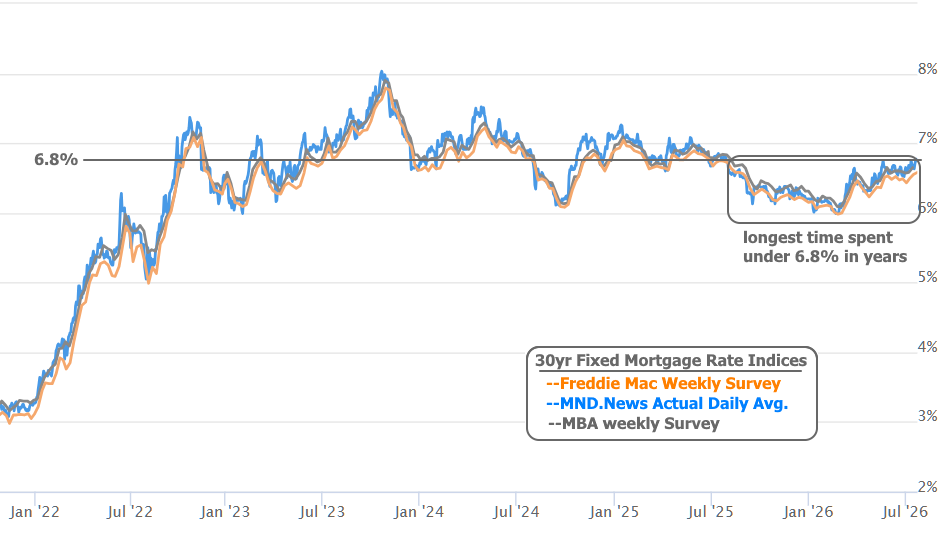
The bad news is clear, but is there any good news? Yes, actually, depending on your definition of "good." While it may not be much of a consolation, it's worth remembering that rates are the highest in a year because that year has been the best stretch of good luck we've seen since 2021. Otherwise, 6.8+ would be just another mid-range mark in the post-covid era.
The even better news is simply this: if rates have largely moved up due to oil prices, then they should be able to recover a meaningful amount of what was lost if oil prices find a way to move back down. Of course that's a big "if" in terms of timing, but it's useful to know that there's a clear path toward lower rates that depends on things that could actually happen in the near term.
Going forward, it clearly makes sense to expect rates and oil to continue their correlation. In addition, next week's Fed announcement is a potential source of volatility independent of fuel prices. The market has priced in nearly a 40% chance of a Fed rate hike despite 9 out of 10 traders expecting the Fed to keep rates steady. Such a dislocation between Fed Funds Futures and market sentiment is a recipe for a larger reaction than normal to a Fed announcement.