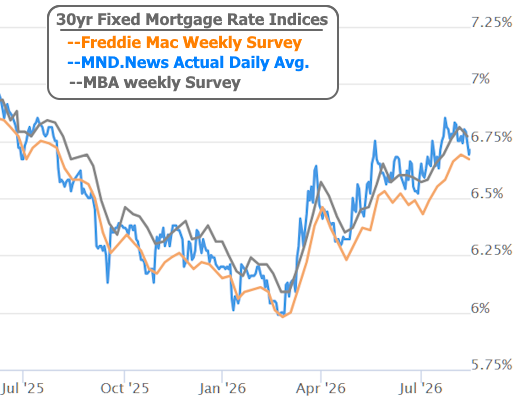



Rates may still be elevated in a general sense, but by the end of the week, they were as low as they've been since July 17th. If we have one thing to thank, it was this week's inflation data.
Things didn't start out on an optimistic note, however. Bond yields (which correlate with interest rates) moved sharply higher with oil prices on Monday as hopes for a U.S./Iran peace deal faded and risks increased of a prolonged blockade of the Strait of Hormuz. Thankfully, prices stabilized by Tuesday morning and the bond market began positioning for the week's two key inflation reports.
The first inflation report was the Consumer Price Index (CPI) on Wednesday morning. While this is typically a much stronger source of inspiration than other inflation reports, it failed to have much of an impact this time around--largely because it came in almost perfectly in line with expectations. Bonds were apparently positioning for better news and thus ended up edging back toward higher rates by the end of the day.
That momentum shifted on Thursday after the release of July's Producer Price Index (PPI), which measures inflation at the wholesale level. PPI managed to come in slightly below forecasts in several key areas--a notable achievement given the higher fuel prices seen in July. Bond yields dropped sharply, helping mortgage rates hit their lowest levels in 4 weeks.
Friday's Retail Sales data came in far below forecasts. At first glance, this offered hope that rates would go even lower (weaker economic data = lower rates, all else equal). But several caveats detracted from the rate-friendly message. Most of the drop in retail sales was accounted for by timing idiosyncrasies relating to Amazon's Prime Day. In addition, the reported drop in fuel sales was distorted by seasonal factors. After adjusting for those caveats, the market treated the sales data as decent news with bond yields moving back up to mid-week highs.
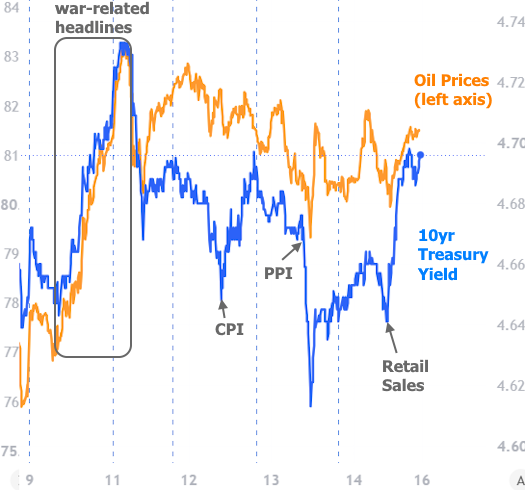
Fortunately, mortgage-specific bonds held up better than 10yr Treasuries. Moreover, the average lender hadn't fully adjusted Thursday's rates to reflect the bond market rally. As such, Friday's rates were only modestly higher. Bottom line, Thursday and Friday's rates were effectively the lowest since July 17th.