


Mortgage rates hit their highest level since June 2025 this week. While that milestone sounds ominous, it was the product of gradual movement and logical motivations.
Monday brought a modest, incremental increase that had more to do with month-end market volatility than any obvious headline. Tuesday was more straightforward. News of new air strikes in Iran sent oil sharply higher and erased an earlier bond rally. Oil prices hit their highest levels since late July as 10yr Treasury yields matched their highest closing levels since January 2025. Throughout the Iran war, oil prices have been highly correlated with rates, primarily due to inflation implications (higher inflation = higher rates, all else equal).
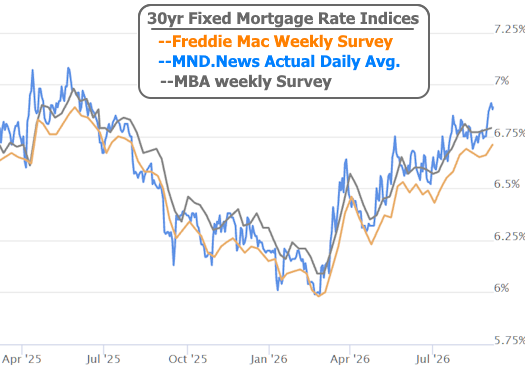
The relationship is never perfect because bonds have plenty of other concerns. Wednesday offered a useful example. Treasury yields briefly made another long-term high, but spent most of the day moving sideways in a remarkably narrow range. Thursday was more encouraging. Oil reached its highest levels of the week, yet bond yields held mostly steady overnight. That was the first hint that buyers were becoming more willing to step in to take advantage of the better entry point provided by 10yr Treasury yields over 4.80%.
Fed Governor Chris Waller supplied a second source of relief Thursday morning. Waller said he would support holding the Fed's policy rate steady at the upcoming meeting if August inflation data (due out next week) show continued progress toward the 2% target. Only a hotter inflation report would push him toward a rate hike. Compared with Fed Chair Kevin Warsh's message at Jackson Hole last week, Waller's tone was confidently dovish, and Fed Funds Futures reacted immediately.
The policy outlook was only half the story. Waller openly disagreed with Warsh's reluctance to explain an explicit reaction function, which is simply a description of how the Fed would respond to different economic outcomes. Waller argued that the public and investors do not need a perfect prediction. They need a useful sense of the Fed's strike zone. He said Warsh was letting "perfect" be the enemy of "good" and dismissed the old "never explain" model with a blunt "good luck with that."
Waller also took a swipe at Treasury Secretary Scott Bessent's efforts to influence the bond market, saying short-run interventions do not accomplish much, even if they remain Bessent's prerogative. That debate may sound academic, but the market definitely took note of Waller's candor as well as the policy implications of his thoughts.
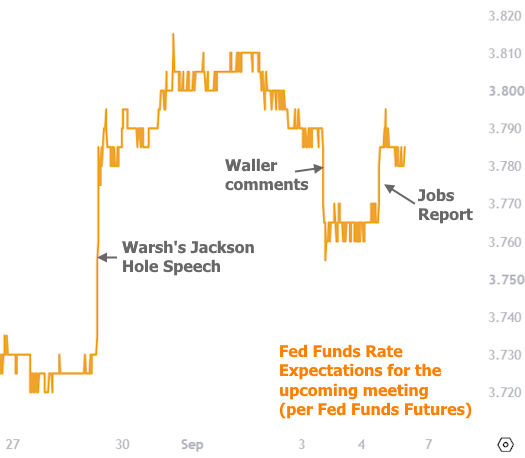
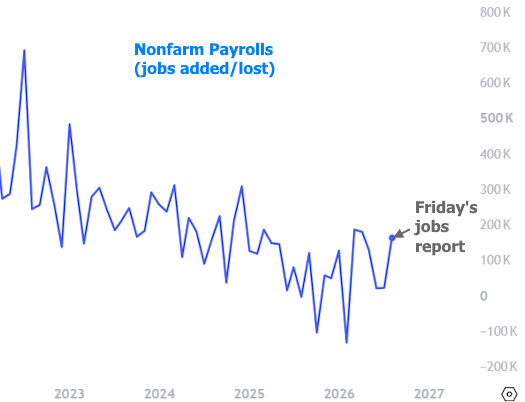
Friday tested the newfound calm as the jobs report showed payrolls jumping by 162,000 compared with a median forecast of only 56,000. Historically, the jobs report has had more power than any other monthly economic report to cause rate volatility. On many occasions in the past, a beat of this size would have resulted in a much larger increase in mortgage rates.
This time, the reaction was surprisingly modest. Treasury yields moved higher in response, but not nearly as much as past experience would suggest. Mortgage rates also rose only modestly and remained safely below Wednesday's long-term highs.
This isn't to say the jobs report doesn't matter. It clearly caused a reaction. Rather, it's simply lost some of its traditional luster due to rapid changes in labor force composition and ongoing seasonal distortions. The unchanged unemployment rate gave markets a steadier counterpoint, and helped facilitate a response that looked modest and measured as opposed to panicked.
The resilience in rates and the bond market seen on Thursday and Friday essentially meant we live to fight another day. The most important battle in the upcoming week centers on the August inflation data with two key reports coming out on Thursday and Friday. If inflation comes in lower than expected, it could reinforce the case for the Fed to keep rates steady--something that would likely help mortgage rates move a bit lower. Hotter inflation could quickly revive rate-hike expectations and send mortgage rates back toward the recent highs. War headlines remain the other major wild card and a constant source of potential volatility as long as the Iran war continues.