





Mortgage rates ended this week at their lowest levels since September 23rd, extending an improvement that had started to look a bit indecisive. Renewed trouble in the tech sector provided the biggest push, with Thursday and Friday bringing a combined drop of 0.08% for the average 30yr fixed rate.
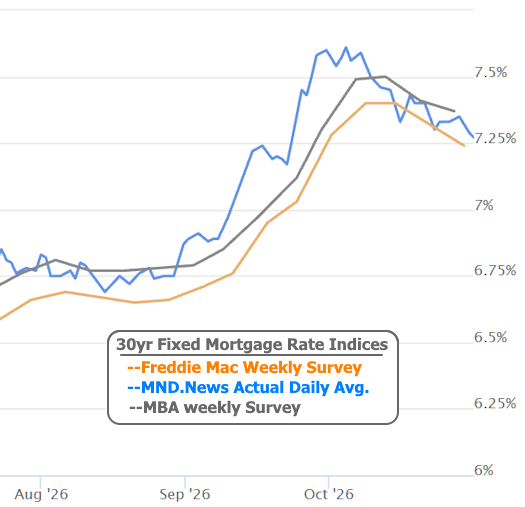
Last week, we noted that further improvement depended heavily on tech’s troubles sticking around. A brief recovery in tech sentiment put that idea to the test. Stocks bounced, and borrowing costs eased for some of the companies at the center of AI-related concerns. Mortgage rates held fairly steady despite losing some of the support behind their recent decline.
With few surprises in the economic data, investors focused on tech and whether Fed Chair Warsh would offer any new clues about future rate hikes.
Why didn’t the Fed move mortgage rates?
The Fed left its policy rate unchanged, as expected. The message accompanying that decision mattered more.
Expectations for future Fed rates had been drifting higher heading into the announcement, likely helped by the early-week improvement in tech sentiment. Warsh’s comments suggested more of a “wait and see” approach, prompting a quick but moderate reversal.
Mortgage rates barely reacted. The Fed controls a short-term overnight rate, while mortgage pricing depends on longer-term bonds. Those bonds must account for the outlook for inflation, economic growth, and demand for debt. A change in expectations for the next few Fed meetings doesn’t necessarily settle those bigger questions.
Wednesday’s slight increase in mortgage rates was already in place before the announcement. The Fed’s message did little to change it.
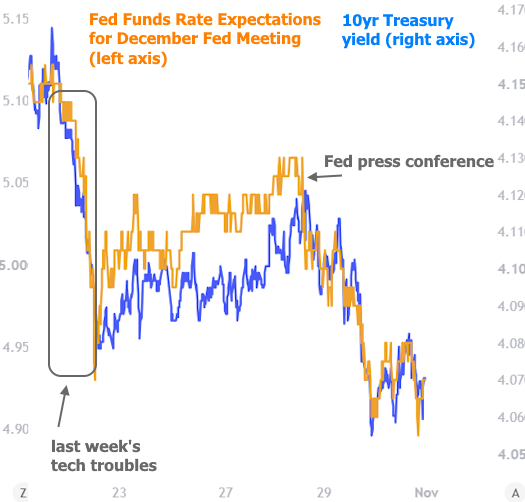
Tech provided the bigger push
Thursday’s heavy NASDAQ selling helped bonds and rates improve. Weak outlooks from Intel and Amazon added to the concerns after the closing bell, giving rates another push lower.
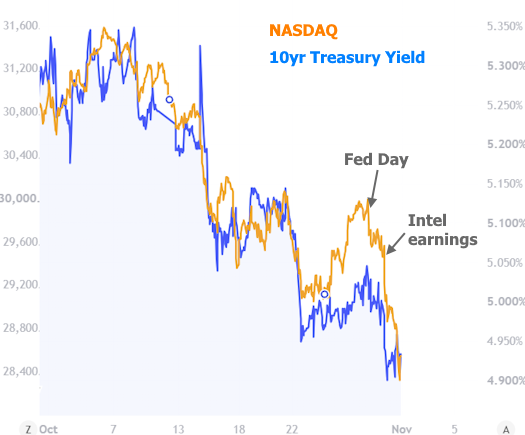
Friday supplied a useful example of why this matters beyond the stock market. Reports suggested Anthropic was unlikely to receive an investment-grade credit rating after its planned IPO. That would mean higher borrowing costs for a company playing a major role in the AI buildout. Bonds recovered most of their earlier losses almost immediately.
Higher borrowing costs could limit how much money these companies raise and spend. That matters for rates in two ways: less borrowing means fewer corporate bonds competing for investors’ dollars, and less spending could mean slower economic growth. Both possibilities can help bring Treasury yields and mortgage rates lower.
But the connection isn’t automatic. At several points this week, bonds were reluctant to follow tech stocks move for move. Friday was largely about protecting Thursday’s late improvement, even as stocks fell further. A bad day for the NASDAQ doesn’t guarantee an equally good day for mortgage rates.
What would keep the improvement going?
Tech jitters remain the most useful clue about near-term rate momentum. If concerns about AI spending and financing deepen, they could continue supporting lower rates. Economic reports showing slower growth or easing inflation would give that improvement a firmer foundation.
If tech sentiment recovers while growth and inflation remain strong, rates could have a harder time building on recent gains. Stronger data could also revive expectations for additional Fed hikes.
For now, the recent improvement has survived another test and produced a new low. Whether it becomes a lasting trend depends on how much of the slowdown markets are worrying about actually materializes.