



Mortgage rates pulled back this week as the bond market digested geopolitical tension. After the 3-day holiday weekend, traders returned to find overseas markets pushing bond yields higher.
The lesser of the two motivations had to do with fallout over fiscal issues in Japan which prompted heavy selling of Japanese bonds. There is often a certain amount of correlation between the sovereign debt of major economies and it's not uncommon to see U.S. yields moving higher if there's a big uptick in Asia/Europe. Generally speaking higher yields translate to higher mortgage rates.
The larger issue was geopolitical in nature. European markets reacted to escalation of the administration's stance on Greenland over the weekend. New tariff threats were part of the problem, but the most noticeable uptick in trading volume followed news that a Danish pension fund was pulling out of Treasuries.
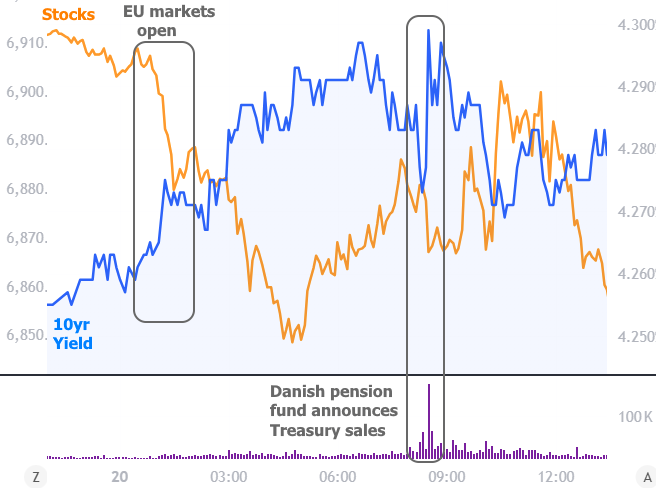
That strategy wasn't seen as sustainable for the rest of Europe's money managers and the overall amount was small in the grand scheme of things, hence the minimal additional rise in 10yr yields.
From that point on, the bond market calmed down through the end of the week. Economic reports were uneventful and several of the biggest examples were very stale as agencies continue getting caught up after the government shutdown.
Mortgage rates were affected by Tuesday morning's bond market weakness, with the average lender pulling back up to levels seen before the big drop on January 9th after the administration's MBS buying announcement. That said, mortgage rates are handily outperforming Treasuries thanks to that same announcement (and, indeed, thanks to actual MBS purchases). There's no other way to explain the following chart:
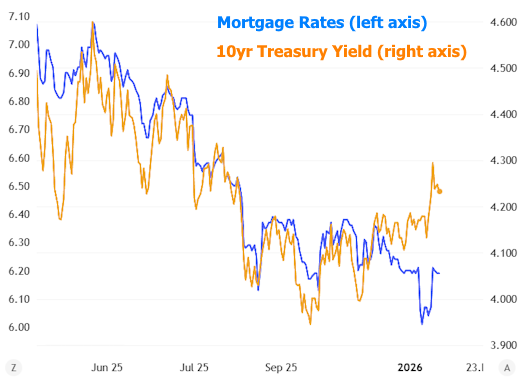
In other words, the MBS buying announcement initially caused mortgage rates to surge lower. Now this week, it's providing insulation to mortgage rates against moving higher at the pace seen in Treasuries.
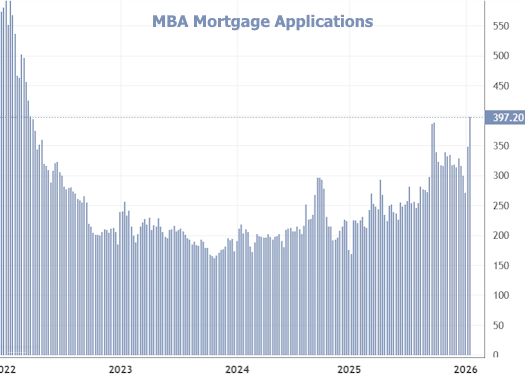
The results of the recent rate rally were on full display in this week's mortgage application data from the Mortgage Bankers Association (MBA).
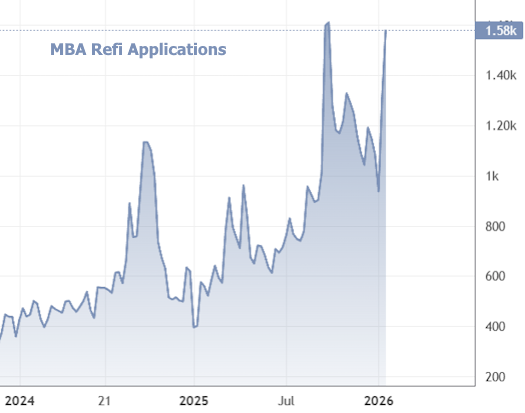
It's normal for refi demand to respond to big rate rallies, but a case could be made that purchase apps are getting some benefit as well. They advanced to their highest level in 3 years this week.
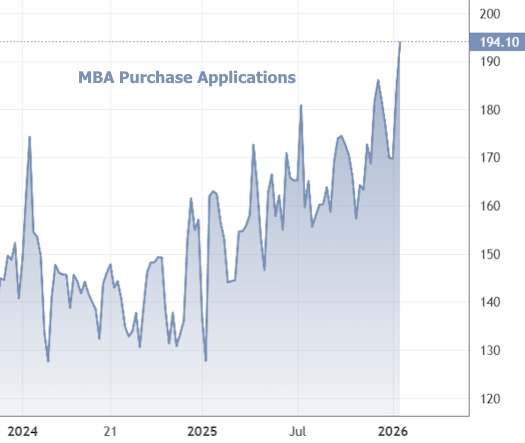
Overall, mortgage apps are the highest in nearly 4 years after this week's data:
Next week brings several more economic reports, but none that are as important for rates as the jobs report that comes out on February 6th. That leaves the Fed announcement as the most newsworthy event. In this case, the market effectively sees a zero percent chance of a Fed rate cut this time around, but the text of the statement and Fed Chair Powell's press conference can always offer clues to how the Fed will approach the following meeting (March 18th).