



It's a common refrain in this newsletter: The Fed does not hike/cut mortgage rates and the two can often move in opposite directions in the short-term.
Mortgage rates were already surging above 7% last week as oil prices broke above $100 per barrel and diesel prices at the pump reached all-time highs. Inflation data also increased the odds of a Fed rate hike this week, adding to the upward pressure.
This is one of the main ways the Fed Funds Rate actually matters to longer-term rates such as mortgages. Financial markets begin accounting for an expected Fed move well before the Fed actually makes it. By the time the Fed meets, mortgage rates have already priced in the expected decision and are waiting for new information about what comes next.
Unfortunately, the Fed delivered that new information on Wednesday.
The rate hike itself did absolutely nothing to the underlying bond market. Bonds barely moved when the decision was announced at 2pm ET. Rates didn't begin moving higher until Fed Chair Kevin Warsh's press conference started 30 minutes later.
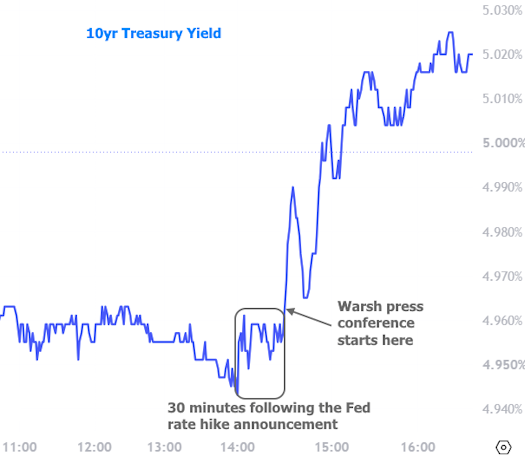
Why? Simply put, Warsh strongly implied that additional hikes are coming. He described Wednesday's hike as "removing some accommodation." When the Fed says policy is accommodative, it means the current Fed Funds Rate is doing slightly more to promote economic growth and inflation than to restrain them. By saying only "some" accommodation had been removed, Warsh effectively hinted at more rate hikes in the near term.
Warsh also said inflation trends had not improved, the economy had strengthened and the geopolitical situation had deteriorated. All three points argue in favor of additional rate hikes.
As we noted last week, there have been indications that longer-term rates were looking for reassurance that the Fed was firmly committed to fighting inflation. Wednesday's hike and press conference more than delivered. Although that caused significant volatility on Wednesday, mortgage rates improved almost all the way back to the best levels of the week on Thursday. In general, this week was much calmer and more sideways than last week.
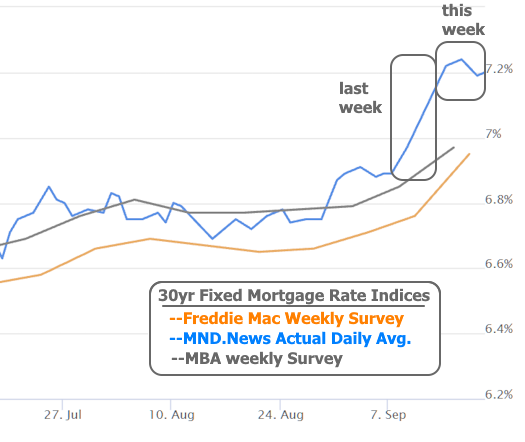
The underlying bond market weakened again on Friday for reasons that may have been incidental to the week's main story. One possibility involved the forex market, specifically Japan selling Treasuries to support the value of its currency. Either way, the average mortgage lender wasn't too much worse for the wear.
The week ahead offers little in terms of truly big-ticket economic data despite a fairly busy calendar. Oil price volatility is as likely as anything to set the tone for day-to-day rate momentum.